


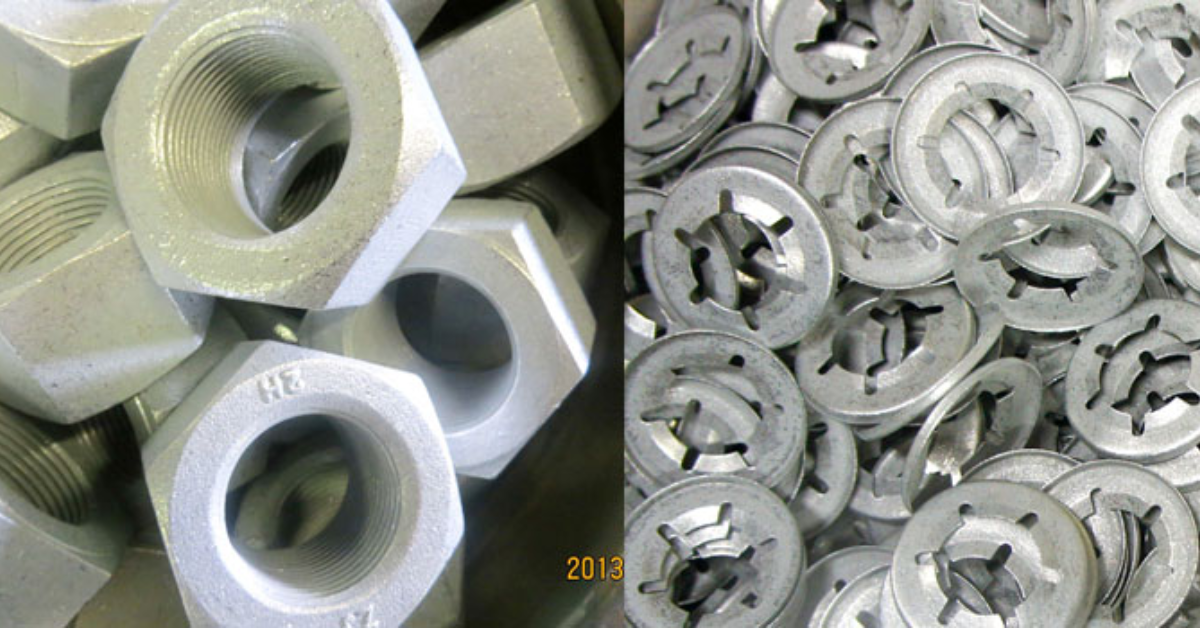
Steel rarely fails all at once. Corrosion usually begins quietly, through moisture, road salts, industrial exposure, or inconsistent surface protection. Hot dip galvanizing services protect steel by coating it in molten zinc, creating a bonded layer that resists rust and extends structural life across demanding environments.
At All Service Mechanical Galvanizing and Plating, this process is viewed as more than a finishing step. Since 1970, galvanizing decisions have been tied to lifecycle durability, maintenance reduction, and long-term performance clarity. In modern infrastructure and manufacturing, the quality of protection often determines the quality of the asset itself.
Table of Contents
- Define What Hot Dip Galvanizing Actually Does
- Evaluate Where Galvanized Service Performs Best
- Compare Hot Dip Galvanizing to Other Coating Methods
- Understand the Process Step by Step
- Assess Cost, Durability, and Lifecycle Value
- Recognize Common Specification Mistakes
- Track How Galvanizing Standards Are Evolving
- Apply Smarter Corrosion Planning
Define What Hot Dip Galvanizing Actually Does
Hot dip galvanizing services involve immersing cleaned steel into molten zinc. The zinc reacts metallurgically with the steel surface, forming multiple protective alloy layers rather than a simple surface coating. This distinction matters. Paint can chip. Surface coatings can separate. Galvanized zinc layers become part of the steel itself, which changes how corrosion protection behaves over time.
The process delivers several operational advantages:
- Long-term corrosion resistance
• Full coverage across edges and corners
• Reduced maintenance frequency
• Sacrificial protection if the surface becomes damaged
At All Service Mechanical Galvanizing and Plating, steel components are often evaluated not just for appearance or coating thickness, but for how they will perform ten or twenty years into service.
That broader view increasingly shapes industrial decision-making.
Evaluate Where Galvanized Service Performs Best
Not every environment creates the same corrosion risk. Coastal regions, transportation corridors, industrial zones, and humid climates accelerate steel deterioration differently.
Reliable galvanized service becomes especially valuable in:
- Structural steel systems
• Highway and transportation infrastructure
• Utility and transmission hardware
• Agricultural equipment
• Outdoor industrial assemblies
• Fasteners exposed to weather cycles
Many clients initially focus on upfront cost. Over time, the larger operational pattern becomes clearer. Maintenance interruptions usually cost more than corrosion protection itself.
This shift is changing how procurement teams evaluate finishing decisions.
Compare Hot Dip Galvanizing to Other Coating Methods
Different finishing methods solve different operational problems. Confusion often happens when all corrosion protection methods are treated as interchangeable.
Strategic Comparison of Common Protection Methods
| Process | Primary Strength | Key Limitation |
| Hot Dip Galvanizing | Thick, durable zinc protection | May affect dimensional precision |
| Mechanical Galvanizing | Uniform coverage for fasteners | Lower coating thickness |
| Paint Systems | Color flexibility | Requires ongoing maintenance |
| Electroplating | Smooth decorative finish | Higher hydrogen exposure risk |
Hot dip galvanizing works particularly well where long-term environmental exposure matters more than cosmetic precision.
Mechanical methods may be preferable for threaded fasteners or high-strength steel components requiring tighter tolerances.
The critical insight is this: coating selection should follow operational context, not habit.
Understand the Process Step by Step
The effectiveness of galvanizing depends heavily on preparation quality and process control.
At All Service Mechanical Galvanizing and Plating, successful outcomes are tied to consistency long before steel reaches molten zinc.
Typical Hot Dip Galvanizing Process
- Surface Cleaning: Oils, debris, and contaminants are removed.
- Pickling: Acid solutions remove rust and mill scale.
- Flux Application: The steel surface is chemically prepared for zinc bonding.
- Molten Zinc Immersion: Steel is submerged into zinc heated to approximately 840°F.
- Cooling and Inspection: Coating thickness and adhesion are evaluated.
Process discipline matters because uneven preparation creates uneven protection.
Many assume galvanizing quality depends mostly on zinc thickness. In practice, surface preparation usually determines long-term coating reliability.
Assess Cost, Durability, and Lifecycle Value
Short term pricing still dominates many purchasing discussions. Yet lifecycle economics increasingly shape infrastructure planning.
Hot dip galvanizing often carries higher upfront processing costs compared to paint systems. However, the maintenance curve looks very different over time.
Long-Term Cost Logic
| Consideration | Short Term Focus | Lifecycle Focus |
| Initial Expense | Lower upfront preference | Durability investment |
| Maintenance | Frequent touch-ups | Reduced intervention |
| Downtime Risk | Often underestimated | Operational priority |
| Asset Longevity | Secondary concern | Core evaluation factor |
Viewed from a broader operational perspective, galvanizing reduces uncertainty as much as corrosion.
That distinction matters in industries where downtime carries cascading financial consequences.
Recognize Common Specification Mistakes
Corrosion protection failures rarely originate from zinc alone. They often begin with mismatched specifications.
Common mistakes include:
- Selecting coating methods without considering exposure conditions
• Ignoring geometry and drainage requirements
• Prioritizing cosmetic appearance over durability
• Applying the same specification across different climates
One recurring issue involves complex fabricated assemblies. Poor venting and drainage design can compromise coating consistency during immersion. Experienced galvanizing planning begins before fabrication, not after. This is where long-term operators develop a different perspective. Prevention is usually engineered upstream.
Track How Galvanizing Standards Are Evolving
The galvanizing industry is becoming more performance-driven and data-aware.
Several trends are shaping current expectations:
- Greater focus on lifecycle sustainability
• Increased infrastructure resilience standards
• Higher demand for coating traceability
• More precise corrosion forecasting models
Environmental exposure modeling is also improving. Engineers can now estimate coating performance with far greater accuracy than even a decade ago. Over the next five years, galvanizing specifications will likely become more environment-specific rather than universally standardized. That reflects a larger industrial shift toward predictive durability planning.
Build Corrosion Protection Into the Asset Strategy
Steel protection decisions influence far more than surface appearance. They affect maintenance schedules, operational reliability, infrastructure confidence, and long-term asset economics. Hot dip galvanizing services continue to remain relevant because they align protection with structural longevity rather than temporary performance.
At All Service Mechanical Galvanizing and Plating, the most successful corrosion strategies are rarely the most aggressive or expensive. They are the most context-aware.
Durability begins with understanding how steel will actually live in the real world.
Frequently Asked Questions
What are galvanizing services?
Galvanizing services apply protective zinc coatings to steel or iron to reduce corrosion and extend service life. The zinc acts as both a physical barrier and sacrificial layer, protecting the underlying metal from moisture, chemicals, and environmental exposure.
What types of metal can be galvanized?
Steel and iron are the most commonly galvanized metals. Carbon steel, structural steel, fasteners, piping, and fabricated assemblies are frequently processed. Certain material compositions respond differently during galvanizing, so compatibility evaluation is important before production begins.
What is hot dip galvanizing?
Hot dip galvanizing is a process where cleaned steel is immersed in molten zinc. The zinc bonds metallurgically with the steel surface, creating layered corrosion protection that performs well in outdoor, industrial, and high-moisture environments.
How do I know if my metal needs galvanizing?
Metal exposed to outdoor weather, humidity, industrial pollutants, or road salts often benefits from galvanizing. Structural components, transportation hardware, utility systems, and agricultural equipment typically require long-term corrosion protection to reduce maintenance and extend operational life.
How long does the galvanizing process take?
Processing time depends on part size, fabrication complexity, preparation condition, and production scheduling. Smaller components may be completed quickly, while larger structural assemblies often require additional handling, inspection, and cooling time before release.
Is galvanized service better than paint alone?
Galvanized service generally provides longer-lasting corrosion resistance than paint alone, particularly in harsh environments. Paint systems may require regular maintenance, while galvanized coatings continue protecting steel even if minor surface damage occurs over time.