
Year Established: 1970
ISO 9001:2015 Quality System
ISO 9001:2015 Quality System
Home > Blog > Mechanical Plating vs. Electroplating: Which Is Better for High-Strength Fasteners?
Choosing the right finish for high-strength hardware comes down to two goals: preventing structural failure and ensuring smooth assembly. While electroplating delivers a bright shine, it introduces hidden risks on hardened steel.
For high-tensile hardware, such as Grade 8 bolts and Class 10.9 fasteners, mechanical plating is the safer choice. It eliminates hydrogen embrittlement, coats threads evenly, and removes the need for baking ovens.
Both methods deposit protective zinc onto steel to prevent rust, but their processes are completely different.
Electroplating submerges parts in a chemical bath, using current to draw zinc onto steel. Electricity gathers at sharp edges, creating heavy buildup on crests while leaving roots thin. Acid cleaning and current also force hydrogen gas into the steel.
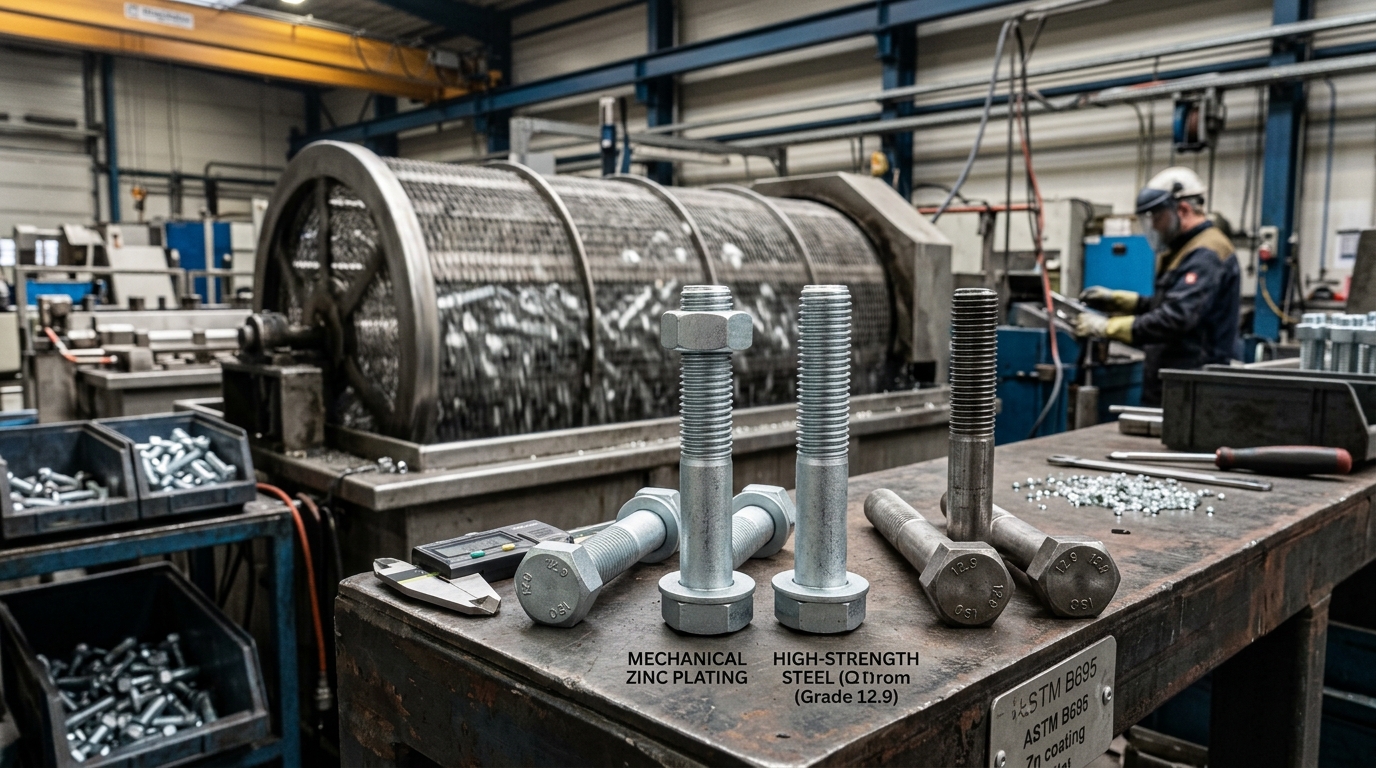
Mechanical plating is a room-temperature process. Parts tumble in a drum with water, zinc powder, a promoter, and glass beads that cold-press zinc evenly onto the metal.
From our Trenton facility, we provide high-volume mechanical plating in and around NJ, helping regional equipment builders source dependable fasteners that stand up to heavy mechanical loads.
When high-strength fasteners fail under load without rust, the cause is almost always hydrogen embrittlement.
Electroplating standards require baking parts at 400°F for 4 to 24 hours after plating. However, baking presents real challenges:
Because mechanical plating uses no electric current or acid tanks, hydrogen never enters the steel, eliminating failure risks without baking. Automotive stamping plants across the Chicago area depend on this cold-welded process to keep high-tension stamped fasteners safe from sudden fracture under heavy vibration.
A protective coating must never compromise thread fit. Uneven thickness creates assembly bottlenecks, galling, and stripped hardware.
Because current gathers at sharp edges, electroplating deposits zinc much thicker on crests than valleys, reducing clearance and causing nuts to bind. Retapping clogged threads wastes labor and strips protective zinc, exposing raw steel to rust.
Mechanical tumbling applies uniform pressure across the thread profile, rolling zinc evenly into roots and crests without lumps.
This smooth finish is essential for double-ended bolts and precision threaded studs where assembly speed matters.
| Operational Feature | Electroplating | Mechanical Plating (Mechanical Galvanizing) |
|---|---|---|
| Hydrogen Embrittlement Risk | High on hardened steel; requires baking | Zero risk; no acid bath; no baking needed |
| Thread Clearance & Fit | Heavy buildup on crests; thin in roots | Uniform layer across peaks and valleys |
| Corrosion Protection | Thin layer, best indoors | Thick layer, built to withstand weather |
| Thread Galling Resistance | Prone to binding under high torque | Naturally lubricated; smooth torque response |
| Baking Requirements | Mandatory 4 to 24 hours in ovens | None; parts ship immediately |
Different manufacturing hubs require tailored metal finishing solutions to match their specific operating environments:
When joint reliability depends on fasteners holding firm under load, you cannot afford brittle failure or clogged threads. Specifying mechanical plating stops failures at the source, preserves tolerances, and lowers costs.
Operating under an ISO 9001:2015 certified quality system in Trenton, NJ since 1970, Mechanical Galvanizing provides high-volume finishing for manufacturers nationwide.
Whether you need surface protection for industrial fasteners or require specialized mechanical plating in New Jersey, call our team at (609) 393-4833 or request an online quote today.
Do mechanically plated fasteners ever require baking?
No. Because the process uses no electric current or acid, hydrogen never enters the metal, making baking unnecessary.
Will mechanical zinc clog fine bolt threads?
No. Glass beads peen zinc uniformly across threads, preserving clearances so nuts spin on freely.
How does mechanical zinc perform outdoors?
Extremely well. Mechanical plating delivers 250 to 1,000+ hours of salt spray defense, which is why contractors and builders seeking durable nails in Memphis trust this coating for outdoor jobs.
Can mechanical plating be applied to electrical parts?
Yes. Beyond standard zinc, we apply solderable mechanical tin coatings for New Jersey electronics manufacturers to ensure long-term conductivity on terminals and busbars.
Can small flat stampings be plated without sticking?
Yes. Tumbling glass beads continually separate flat parts during the cycle, ensuring complete individual coverage.

